Halkidiki Areas
Explore the three peninsulas of Halkidiki
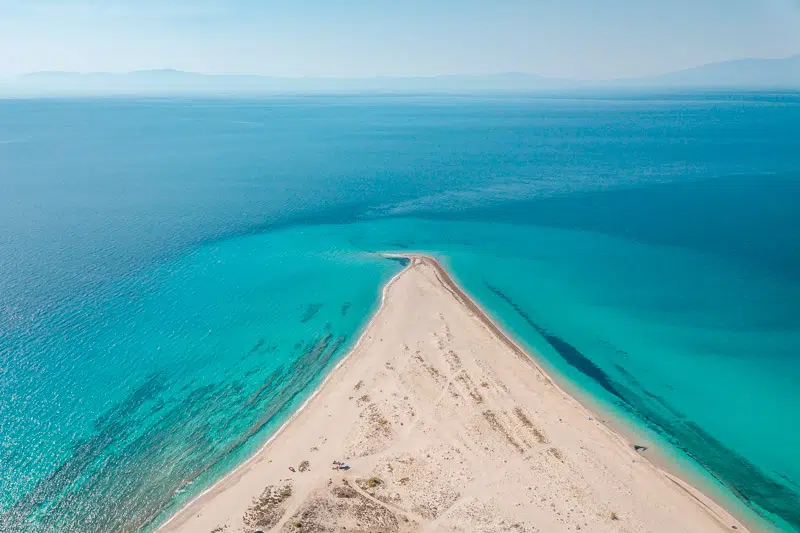
Kassandra
Kassandra is the first and most western of the three peninsulas of Halkidiki. With a length of 50 kilometers and a width of 7-15 kilometers, it is the most developed and accessible tourist destination in the region. Its modern name comes from the general of Alexander the Great, Cassander, who founded the ancient city of Kassandreia here in 316 BC. ## Geography and Access Kassandra is connected to the rest of Halkidiki via the historic Potidea canal, a technical work dating back to ancient times. It is located 70-120 kilometers from Thessaloniki, depending on the destination — the route is paved and easy, without mountainous inclines. Nea Moudania is the closest point (60 km), while the southernmost tip, Cape Poseidi, is 120 km from the city. ## Beaches Kassandra boasts over 30 notable beaches, characterized by sandy shores and shallow waters, making it ideal for families with children. The most famous include <strong>Sani</strong> with its turquoise waters and the namesake 5* resort, <strong>Kallithea</strong> with its vibrant atmosphere, <strong>Chanioti</strong> with its lively party scene, <strong>Pefkochori</strong> with pine trees reaching the sea, and <strong>Trani Ammos</strong> at Cape Poseidi with its impressive white sand dunes. The majority of the main beaches have Blue Flags. ## Villages and Towns The administrative capital is Kassandreia, a small town inland. The main tourist areas are located along the sea: Kallithea, Chanioti, Pefkochori, Siviri, Fourka, Nea Fokaia, and Paliouri. A more distinctive place is <strong>Afitos</strong> — a traditional stone village on a high cliff with panoramic views of the Thermaic Gulf. In southern Kassandra, the Loutra Agias Paraskevis offer thermal waters known since antiquity. ## Character and Atmosphere Compared to Sithonia (more natural) and Athos (monastic state), Kassandra is the most "organized" peninsula. It has a complete tourist infrastructure — large hotels, beach bars, restaurants of all categories, shops, nightclubs, supermarkets, medical coverage, and ATMs everywhere. The nightlife in Chanioti and Kallithea attracts young people from all over Northern Greece and the Balkans. ## Ideal For Kassandra is the most friendly choice for those coming for the **first time** to Halkidiki — easy access, complete infrastructure, and a variety of options. It is ideal for: - **Families with small children**: shallow waters, organized beaches, medical coverage - **Middle-aged couples**: a variety of hotels from budget to 5* - **Young people and groups**: party scene in Chanioti and Kallithea - **Short vacations from Thessaloniki**: proximity, easy access ## Best Time to Visit The tourist season runs from May to October. The ideal periods are **June** (before the peak congestion) and **September** (warm sea 24-26°C, fewer crowds, lower prices). August is peak season with high prices and fully booked hotels — requiring reservations 2-3 months in advance.
View accommodations→
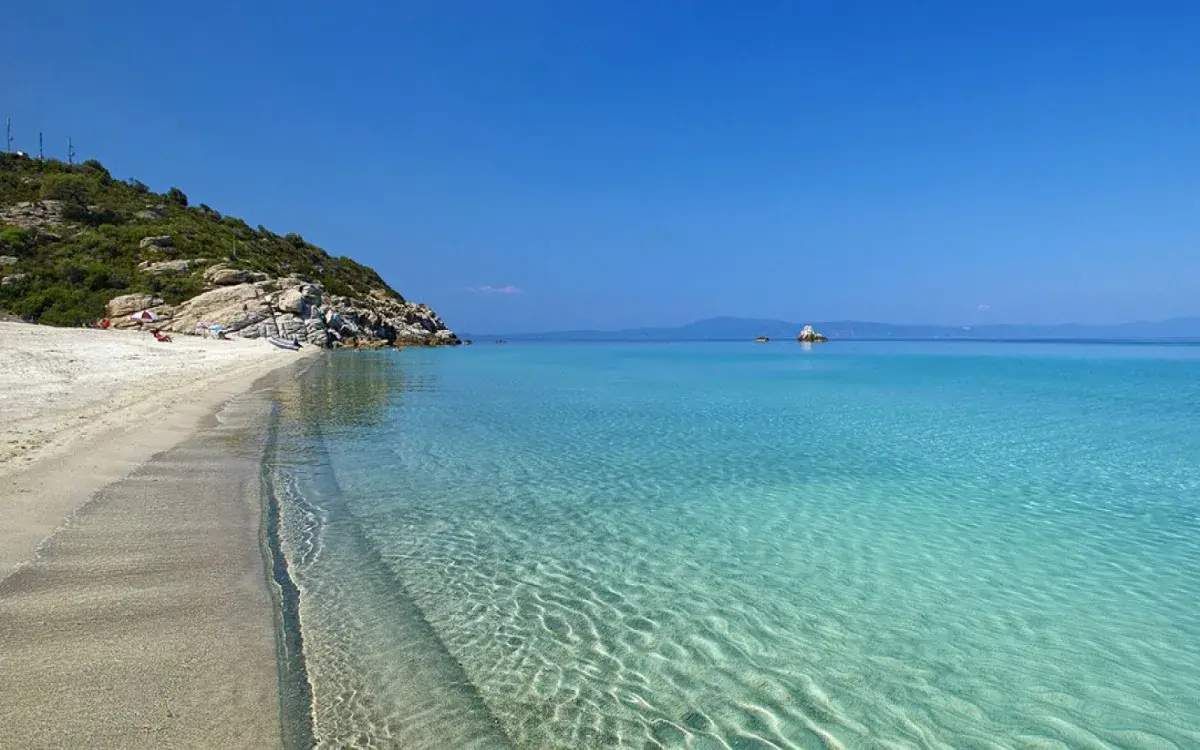
Sithonia
Sithonia is the second and middle peninsula of Halkidiki. With a length of 50 kilometers and a coastline of 117 kilometers, it is the most natural and primordial destination in the region. Its name comes from the ancient Sithon, son of Poseidon and king of the area in Greek mythology. ## Geography and Access Sithonia is more mountainous than Kassandra — the mountain <strong>Itamos</strong> rises to 811 meters, covered with dense pine forests. This geomorphology creates dozens of secluded coves and hidden beaches accessible by boat or dirt roads. It is located 110-150 km from Thessaloniki, depending on the destination — a 2 to 2.5-hour drive. There are fewer bus routes (KTEL) compared to Kassandra. ## Beaches — the Most Beautiful in Halkidiki Sithonia undoubtedly has the most impressive beaches in Halkidiki. <strong>Karydi</strong> in Vourvourou, with its famous turquoise shallow waters and the small island of Kavouro, is the most photographed spot in the area. The <strong>Kavourotripes (Portokali)</strong> with their white rocks and emerald waters resemble the Caribbean more than mainland Greece. Other notable beaches include: <strong>Sarti</strong> (over 3 km long, with a view of Athos), <strong>Porto Koufo</strong> (a natural protected harbor), <strong>Kalamiitsi</strong>, <strong>Armenistis</strong>, and <strong>Platanitsi</strong>. ## Diaporos Islands To the north of Sithonia lies a cluster of 9 small uninhabited islands — the <strong>Diaporos</strong>. With crystal-clear waters and hidden beaches, they are the top destination for boat trips from Vourvourou, Sarti, or Ormos Panagias. Full-day cruises (30-45 euros per person) with 3-4 swimming stops are one of the must-do experiences in Halkidiki. ## Villages and Towns <strong>Neos Marmaras</strong> is the largest tourist center in Sithonia, with complete infrastructure, a marina, and the neighboring Porto Carras — one of the largest hotel complexes in Northern Greece, featuring a casino, golf course, and winery. <strong>Nikiti</strong> retains the character of a traditional village. <strong>Sarti</strong> on the eastern coast is a popular base for beaches like Kavourotripes and Karydi. At an altitude of 380 meters, <strong>Parthenon</strong> offers panoramic sunsets over Athos. ## Character Sithonia is more "wild" and less commercialized than Kassandra. There are fewer large resorts, more small family-run accommodations, and more opportunities for snorkeling and exploration. Prices are slightly higher in certain areas due to demand (Vourvourou, Sarti), but there are also affordable options (Syki, Kalamiitsi). ## Ideal For - **Couples** looking for a romantic yet "untouched" destination - **Snorkeling and marine life enthusiasts** - **Landscape photographers** - **Families with older children** who appreciate nature - **Repeat visitors to Halkidiki** seeking a different experience ## Best Time Like all of Halkidiki: **June** or **September** for the best combination of warm sea and fewer crowds. In Sithonia, September is particularly lovely for boat trips to Diaporos — fewer people on the boats and beaches.
View accommodations→
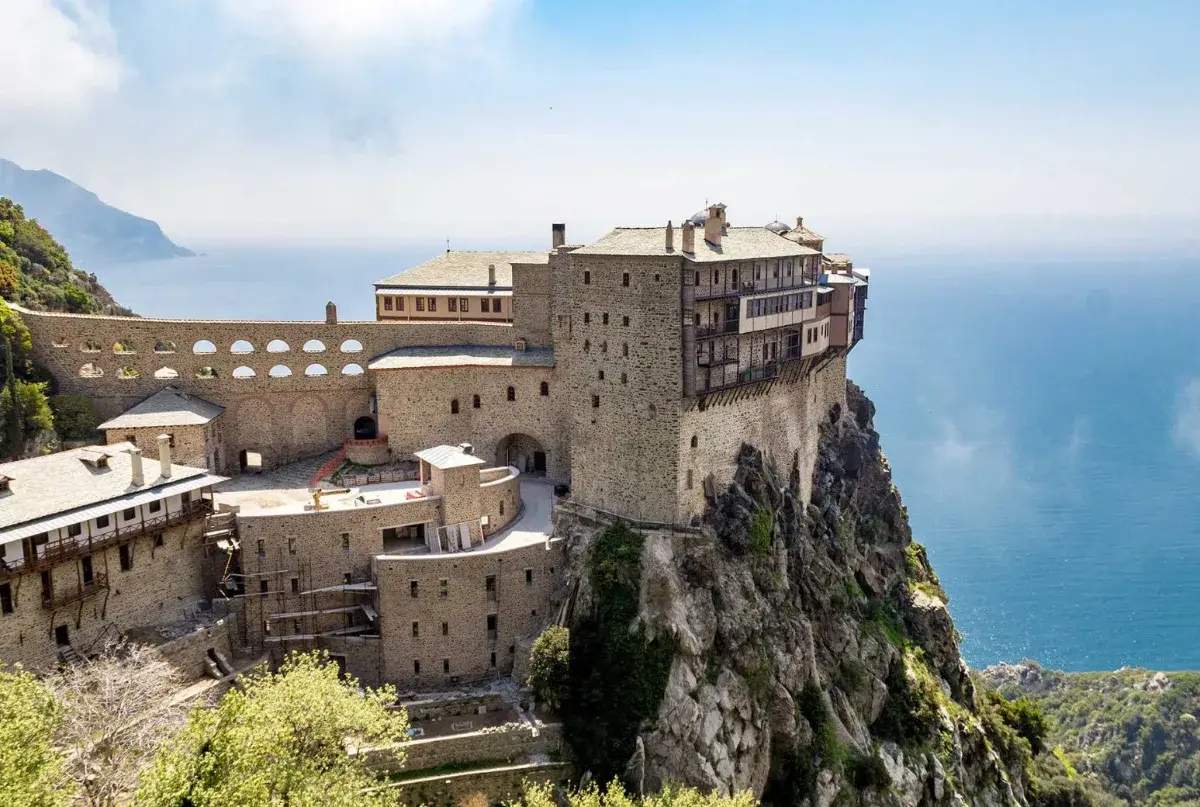
Athos
Athos (or Mount Athos) is the third and easternmost leg of Halkidiki. It is not a typical tourist destination — it is an autonomous monastic state of 335 square kilometers with 20 active Orthodox monasteries, around 2,000 monks, and a continuous Christian monastic presence since the 9th century. UNESCO World Heritage Site since 1988. ## Geography The peninsula is 50 kilometers long with its peak at Mount Athos, rising to <strong>2,033 meters</strong> — one of the most impressive mountain landscapes in Greece, steeply rising from the sea. According to Greek mythology, the mountain was created when the giant Athos hurled a massive rock at Zeus during the Gigantomachy. ## Administration and Special Status Athos is governed by the Holy Community in Karyes (the administrative center). It has a special autonomous status within the Hellenic Republic and the EU, recognized in the Accession Treaty of 1979. It survives under a special tax regime dating back to the Byzantine and Ottoman periods. ## Access — Forbidden for Women Entry to the peninsula is allowed only for male pilgrims with a special <strong>permit</strong> (30-35 euros, application 1-3 months in advance). Passenger boats depart from Ouranoupoli (west coast) and Ierissos (east coast). Women's entry has been prohibited since 1045 — a ban that is officially enforced. For women, mixed groups, or those without a permit, the only option is a **sightseeing cruise** from Ouranoupoli or Ierissos. The boats sail along the coast at a distance of 500 meters (as stipulated by law) and offer excellent views of the monasteries. Duration is 3-5 hours, cost is 25-40 euros. ## Monasteries 20 active monasteries with the Great Lavra (founded 963 AD) as the oldest. Several non-Greek monasteries: <strong>Chilandari</strong> (Serbian), <strong>Zografou</strong> (Bulgarian), <strong>Saint Panteleimon</strong> (Russian). They host over 13,000 manuscripts and over 100,000 old printed books — one of the most significant Byzantine collections in the world. ## Beaches of the Surrounding Area The "Athos" beaches in our directory mainly refer to the coastal areas around Ouranoupoli and Ammouliani — not to the beaches within the peninsula of Mount Athos (which are inaccessible). <strong>Ammouliani</strong> is the only inhabited island of Halkidiki with excellent beaches (Alykes, Megali Ammos, Agios Georgios). The <strong>Drenia</strong> islands off the coast of Ammouliani have crystal-clear waters and are ideal for boat trips. ## Villages and Infrastructure <strong>Ouranoupoli</strong> is the "gateway" to Mount Athos — a small town with a large port, a medieval tower, hotels, and fish taverns. <strong>Ierissos</strong> is the largest village in eastern Halkidiki with a notable fish tavern tradition and archaeological interest (ancient Akanthos, Xerxes Canal). ## Ideal For - **Orthodox pilgrims** (men with permits) - **Lovers of Byzantine art and history** - **Visitors wanting a Mount Athos cruise** - **Those combining beach holidays with Orthodox tourism** - **Those wishing to visit Ammouliani** ## Best Time For pilgrims with permits: **May** and **September**. For sightseeing cruises: **June-September** (calm sea, good visibility). The Easter period is particularly spiritually intense.
View accommodations→
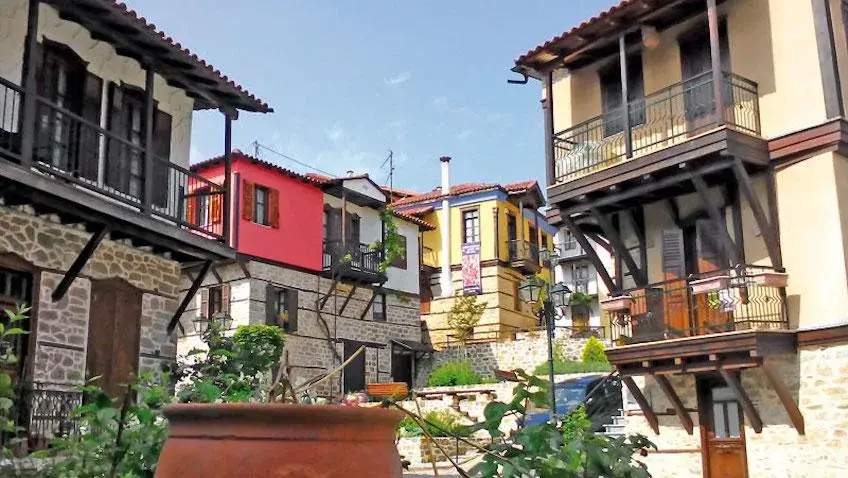
Mainland Halkidiki
The "mainland Halkidiki" is the northern part of the region that extends over the three peninsulas. It includes the mountainous villages, the central coastal zone, and the capital Polygiro. It is the least touristy but perhaps the most authentic part of Halkidiki — here you find the "real" life of the region. ## Geography and Access The mainland consists of: - **Coastal zone** between the Potidea Canal (entrance to Kassandra) and the entrance to Sithonia: includes Nea Moudania, Nea Kallikrateia, Agios Mamas, Gerakini, Psakoudia, Kalyves Poligirou - **Northeastern coastal zone**: Ierissos, Stratoni, Olympiada, Pyrgadikia - **Mountainous central zone**: Polygiro, Arnaia, Paleochori, Taxiarchis, Varvara, Stratoni, Megali Panagia (all on the slopes of Cholomontas) - **Northwestern area**: Nea Triglia, Nea Plagia, Galatista, Petrokleio Access from Thessaloniki is easy — National Road 16 crosses the mainland. ## Polygiro — The Capital <strong>Polygiro</strong> is the administrative center of the Halkidiki region. It is not a tourist destination in the usual sense, but it hosts the most important <strong>Archaeological Museum</strong> of the region — with findings from Olynthos, Potidea, Sani, Acanthus, and other ancient cities. It also serves as the most comprehensive service city (hospital, court, educational institutions). ## Mountain Villages The traditional mountain villages of Cholomontas are a hidden gem of Halkidiki. <strong>Arnaia</strong> is one of the most beautiful traditional villages in Northern Greece — a declared traditional settlement with stone two-story houses, cobblestone streets, and a notable folklore museum. Other mountainous villages include: <strong>Taxiarchis</strong> (600m altitude), <strong>Paleochori</strong> (520m), <strong>Varvara</strong> (700m — one of the highest), <strong>Megali Panagia</strong>. All of these were part of the "Mandemochoria" — the privileged mining villages of the Ottoman period. ## Archaeological Sites The mainland hosts the most significant archaeological sites of Halkidiki: - <strong>Ancient Olynthos</strong>: the most important city of Halkidiki in the 5th-4th century BC, destroyed by Philip II in 348 BC — with remarkably preserved houses and mosaics - <strong>Stageira + Aristotle's Grove</strong> near Olympiada: the birthplace of Aristotle, featuring a unique educational park - <strong>Petraloons Cave</strong>: one of the most important Paleolithic sites in Europe — here the "Skull of the Archanthropus" aged 700,000 years was found - <strong>Acanthus + Xerxes Canal</strong>: in Ierissos ## Beaches The beaches of the mainland are less known but respectable. <strong>Olympiada</strong> has a sandy beach with a fishing tradition. <strong>Gerakini</strong>, <strong>Psakoudia</strong>, and <strong>Nea Moudania</strong> are ideal for short getaways from Thessaloniki. Cruises to Mount Athos depart from <strong>Stratoni</strong> and <strong>Ierissos</strong>. ## Gastronomy and Products The mainland is the source of the most important local products: - <strong>Halkidiki Olives</strong> (PDO since 2011) — mainly from Polygiro and Arnaia - <strong>Halkidiki Honey</strong> (PGI) — pine honey from Cholomontas - <strong>Cholomontas Cheeses</strong> — batzos, manouri, local feta - <strong>Mussels</strong> from Olympiada and Stratoni ## Ideal For - **Lovers of authentic Greece** who want to avoid the mass scene - **Those interested in archaeology and history** - **Visitors on short getaways from Thessaloniki** - **Photographers of traditional villages** - **Hikers** (Cholomontas has a notable network of trails) - **Lovers of local gastronomy**
View accommodations→