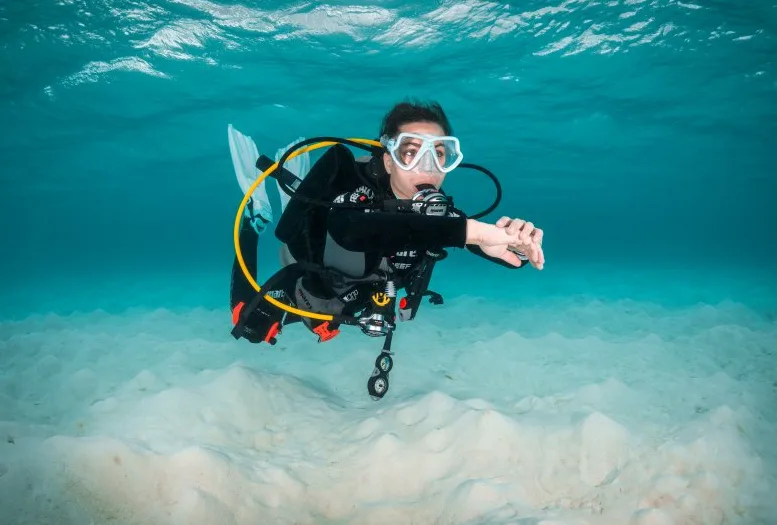
Halkidiki has decent diving infrastructure and a natural environment that makes it interesting for those looking to explore the underwater life of the northern Aegean. Unlike the islands of the southern Aegean (where visibility is legendary), Halkidiki offers more diverse landscapes: ancient shipwrecks, underwater caves, rocky plains with rich marine life, and some unique diving routes.
Where to Dive in Halkidiki
Sithonia
Sithonia is the best area for diving in Halkidiki, due to its rocky coasts, underwater formations, and visibility reaching 15-20 meters in good conditions.
Main spots:
- Diaporos Islands (from Vourvourou): the rocky edges of the islands have excellent marine life. Breams, salema, saddled bichirs, octopuses, and some larger species. Depths of 5-25 meters.
- Porto Koufo: the sheltered bay offers excellent visibility and a gradual bottom. Good for beginners and experienced divers.
- Kavourotripes: rocky edges with short-duration caves.
- Kalamiitsi: rocky coast with impressive underwater formations.
- Ancient Toroni: underwater remains of an ancient city — temple columns are visible in shallow waters, with some sections of wall in deeper areas.
Athos Side (Ierissos, Ouranoupoli)
Diving around Amouliani and the coastal rocky landscapes towards the border of Athos. Rich marine life, several hidden coves accessible only by sea.
Kassandra
Less known for diving due to sandy coastlines at most points. Some interesting spots at Cape Poseidi and towards Sani.
Diving Centers
There are 4-6 certified diving centers operating in Halkidiki, mainly in:
- Neos Marmaras: 1-2 centers
- Vourvourou: 1 center
- Ouranoupoli: 1 center
- Kallithea: 1 center
All provide equipment, training, and guided dives. PADI or SSI certifications are the most common.
What You Can Do
Discover Scuba Diving (for beginners with no experience)
First diving experience in shallow waters (5-12 meters). Duration: 2-3 hours total, with 30 minutes underwater. No certification needed. Cost: 80-120 euros.
Open Water Diver Course (certification)
4-5 day program with theory, practical training in a pool, and 4 dives in open water. You receive internationally recognized certification. Cost: 350-500 euros.
Fun Dives (for certified divers)
Dives at interesting spots in Halkidiki, accompanied by a guide. Cost: 40-70 euros per dive, or packages of 5-10 dives at a discount.
Specialty Courses
More specialized courses: deep diving, navigation, wreck diving, underwater photography. Cost: 150-300 euros per certification.
Best Time for Diving
- Best visibility: September-October (cold sea, clearer)
- Warmest waters: July-August (25-27°C)
- Best balance: June and September — warm waters, less crowd, good visibility
Diving in winter (November-March) is possible but requires a 7mm wetsuit or even a drysuit. Few diving centers operate in winter.
Marine Life You Will See
- Fish: breams, salema, saddled bichirs, red mullets, scad, larger groupers are rare
- Octopuses: often found in rocky caves
- Crabs and lobsters: in rocky corners
- Jellyfish: seasonal, mainly in summer
- Sea slugs
- Rarely: dolphins (in deeper waters) and turtles
Ancient Shipwrecks
Along the coasts of Halkidiki, there are several ancient shipwrecks, but most are under protection of the Ministry of Culture and diving is not allowed without special permission. The shipwrecks you can legally visit are mainly newer — vessels from the 20th century and fishing boats that have sunk.
Practical Information
- Age limits: from 10 years for bubblemaker programs, from 12 for Junior Open Water, from 15 for Open Water
- Medical certificate: recommended for those with respiratory issues, heart conditions, or ear problems
- Contraindications: pregnancy, recent surgery, certain medications
- Safety: all serious centers have life insurance for trainees. Check before registering.
- Booking: for discover scuba or fun dives, 1-3 days in advance is sufficient. For certifications, one week.
Snorkeling — the alternative without equipment
If you don’t want full diving but are interested in marine life, Halkidiki offers excellent areas for snorkeling:
- Kavourotripes (Sithonia): perhaps the best spot
- Porto Koufo: excellent visibility at the edges
- Diaporos Islands: on the rocky sides
- Ancient Toroni: to see the underwater ancient columns
Mask and snorkel equipment can be rented from beach bars for 5-10 euros per day, or you can bring your own.