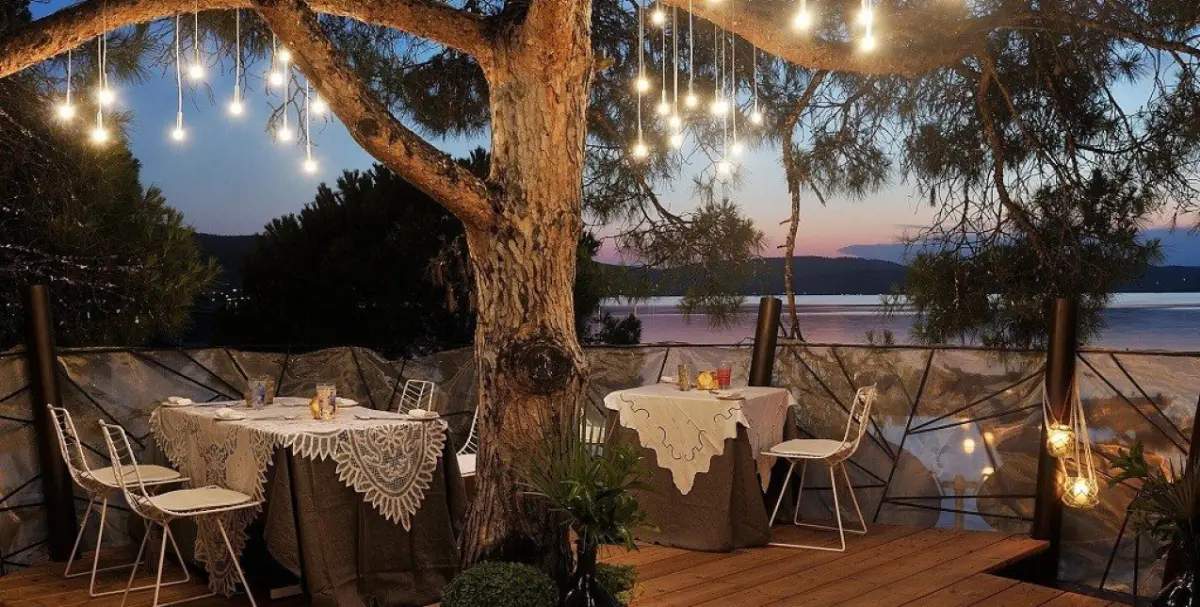
You don't recognise a good Halkidiki taverna by its menu, but by its tables: Greek families, a short handwritten list, wine from the carafe. We've gathered the places where the locals eat — and the unwritten rules that come with them.
How to Recognize a Good Tavern
It's not a big secret, but few apply it systematically. The signs:
- It has Greek customers, especially local Halkidiki residents (usually middle-aged, groups of 4-6 people). When a tavern is 90% filled with foreign tourists, the owners know that the customer won't return, and quality declines.
- Menu not in 6 languages with photos. The presence of a menu with large photos of dishes is almost always a bad sign.
- Few dishes on the menu. If a tavern has 80 dishes, almost nothing is fresh. Good taverns have 20-30 options, but well-designed.
- Daily "ask from the display" for fish. In a serious fish tavern, they show you the display with the fresh fish, tell you what was caught today, and weigh it in front of you. If you order fish from a menu without being shown, you're likely to get frozen fish.
- Orders local bulk wine. A good sign if they offer local wine from a carafe — Halkidiki has notable production in Sithonia and Polygyros.
What to Order by Area
In Fish Taverns by the Sea (Neos Marmaras, Sarti, Pefkochori, Kallithea)
The more serious options, if fresh: grilled red mullet (12-18 euros per 100g), dentex, sea bream, fried anchovies by the kilo (10-14 euros). The mussels from Halkidiki are notable — the area has significant production (Ormos Panagias, Olympiada). Try mussels or saganaki or fried with yellow tsipouro. The grilled octopus is classic, but ask if it's local or imported — it makes a significant difference.
What to avoid: the specialty "fish soup" in tourist areas (often made from frozen grouper), and "seafood risotto" — it's not Greek cuisine and often disappoints.
In Mountain Taverns (Arnaia, Parthenonas, Polygyros, Taxiarchis)
Here is the kingdom of meat dishes. Lemon goat or stifado are local specialties, especially in the areas around Holomontas. Stews (goat in a clay pot, lamb with olive oil and oregano, pork with leeks) are served in taverns that cook from dawn. The mushrooms from Holomontas are notable, especially from September to November — try them in saganaki or grilled.
Prices are generally 20-30% lower than seaside taverns, and portions are large.
Everywhere — Worthwhile Meze
- Taramosalata — if homemade, it differs dramatically from commercial versions
- Fava from Santorini — not local but a staple on Greek tables
- Saganaki cheese — simple, a good sign of the tavern
- Tyrokafteri — an indicator of local cheese
- Tomato fritters — when tomatoes are ripe, good in July-September
- Gigantes plaki — a cold dish, good with tsipouro
Local Products You Will Encounter
Halkidiki has several PDO/PGI products that you will see on menus:
- Halkidiki olives (green, large) — protected designation of origin since 2011. Served almost everywhere as an appetizer.
- Halkidiki honey — mainly pine honey, from the Holomontas area.
- Cheeses from Holomontas — batzos, manouri, local feta.
- Tsipouro — an essential accompaniment for meze. The local variety has a distinctive flavor.
- Sithonia wines — Porto Carras is perhaps the most well-known estate, but there are also smaller wineries in the interior of Sithonia and Kassandra with notable results.
What to Expect in Prices
For comparison, a table for 2 people with meze, one portion of fish or meat, a carafe of tsipouro, and water:
- Seaside tourist tavern: 50-75 euros
- Seaside tavern with local clientele: 35-50 euros
- Mountain tavern: 30-45 euros
- Beach bar restaurant (Sani, Porto Carras, Eagles): 80-130 euros
Fish portions are charged by the kilo, so if you order a whole fish weighing 800g at 60 euros/kilo, the portion will cost 48 euros. Always ask for the price per kilo beforehand.
The Real Rule: Ask the Locals
The most reliable method is to ask the owner of your accommodation, or someone at the shop where you buy breakfast. Locals have 2-3 favorite taverns in each village, and they are almost always different from those that appear first on TripAdvisor. Highly rated taverns on review sites tend to be those that have specialized in foreign tourists — they are not necessarily bad, but they are often more expensive and more "established" in standardized dishes.
Festivals — The Opportunity to Eat Like a Local
From June to the end of August, almost every village has a festival celebrating its patron saint. Large tables are set up in the squares, meat is grilled, bulk wine is shared, and prices are low because they are organized by local parishes or associations. It is one of the most authentic gastronomic experiences — and the food caters to the residents themselves. Ask in your village when the next festival is.
The largest: August 15 (Assumption) almost everywhere, July 26 (Saint Paraskevi) in the eponymous villages, July 20 (Prophet Elijah) in the mountains.
Practical notes for international visitors
Taverna means: plates arrive when they're ready, everything is shared, and the house wine from the carafe (chyma) is nearly always the right call. If you expect precisely choreographed courses, the best move is to relax into it.
The most reliable quality signal across the peninsula: Greek families at the tables and a short, handwritten menu. Booking is wise everywhere in August; otherwise arriving before 8pm — before the Greeks come out — usually gets you a table. Tipping: rounding up is plenty, 5-10% is generous.