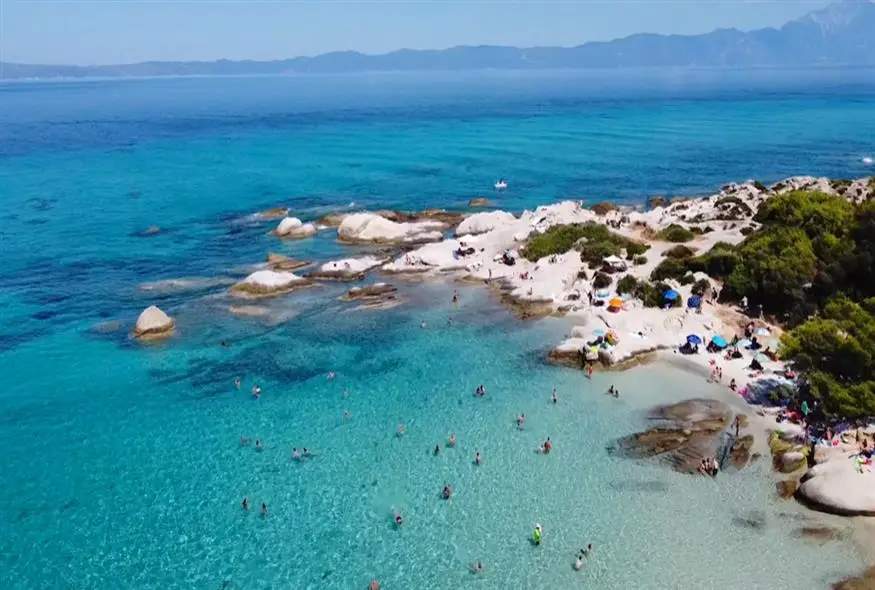
Kavourotripes is Sithonia's "exotic" postcard: white rocks, turquoise water and a string of little coves that look retouched. It's the most photographed beach on the peninsula — and worth every step of the climb down.
Where they are and how to get there
On the southwestern coast of Sithonia, between Sykia and Toroni. The closest bases are Sykia (5 km) or Sarti (12 km). From Thessaloniki: 145 km, about 2 hours and 25 minutes of driving.
Important note: the last 2 kilometers to the beach are a dirt road. In good condition, but drive slowly if you have a sensitive compact car. After rain, it may be difficult. An SUV is more comfortable.
There is no public transport — a car or taxi is essential. From Sarti, a taxi costs 15-25 euros one way.
What stands out
The color of the water
The combination of white sand in shallow coves with rocky walls around creates waters of exceptional color. In the shallower areas, the color is almost fluorescent turquoise; in slightly deeper waters, it becomes emerald. On sunny days with no waves, visibility exceeds 10 meters.
The rocks
White limestone megoliths break the coastline into dozens of small coves. You can explore by walking from cove to cove or swimming. Every corner is a unique photographic composition.
Snorkeling
Probably the best snorkeling spot in Sithonia. The rocky edges are full of marine life: bream, salema, saddled bichir, octopuses, and if you're lucky, some larger species. Bring your own equipment — there is no rental on site.
What is NOT there
It is crucial to know what you will NOT find:
- No organization: no sunbeds, no umbrellas, no beach bar
- No showers or toilets
- No lifeguard
- No shade (except for what the rocks provide at certain times)
- No canteen (sometimes someone appears with a van selling water and snacks — don’t rely on it)
You need to come prepared.
What to bring
- Plenty of water: at least 2 liters per person
- Food/snacks: there are no purchasing options
- Full sunscreen: SPF 50, and reapply often — the sun exposure is intense
- Hat, sunglasses
- Towel: maybe 2 (one dry for the return)
- Water shoes: the rocks have sea urchins. Flip-flops are not sufficient.
- Snorkeling gear: mask, snorkel
- Camera/GoPro: the spots are worth capturing
- Trash back with you: there are no bins
When to go
Best times:
- Morning 8:00-11:00: the light is magical, minimal crowds, calmer waters
- Afternoon 17:00-19:30: sunset gives golden colors to the rocks, hence the name "Orange"
Avoid 11:00-15:00 in summer: excessive heat, no shade, and the beach fills up during peak hours.
Best months: June and September. In peak August, after 12:00, Kavourotripes can get quite crowded — you may struggle to find parking within 200 meters of the beach.
Beach or photographic destination?
This is a crucial distinction. Kavourotripes are not ideal for an entire beach day with kids. They are perfect for:
- 2-3 hours of snorkeling + photos
- Visiting as part of a broader exploration of Sithonia
- Sunset cocktails with your own supplies
For a full day of relaxed beach services, Sarti or Sykia are clearly more practical.
Combination trip
Typical day from Sarti:
- Morning at Kavourotripes (8:00-11:00) for snorkeling and photos
- Return to Sarti by 11:30
- Beach in Sarti from noon to afternoon
- Dinner at a fish tavern
Alternatively, base in Sykia:
- Morning at Kavourotripes
- Lunch in Sykia
- Afternoon visit to Porto Koufo
Similar beaches nearby
If you can't reach Kavourotripes or want something similar:
- Spathies (between Kalamitsi and Porto Koufo): similar character, even more secluded
- Old Sarti beaches: small coves accessible only by footpath
- Diaporos and surrounding islands: similar beauty, but only by boat
A little ecological note
Kavourotripes are in a protected area NATURA 2000. Respect the environment:
- Don’t leave trash — take it with you
- Don’t break or move rocks
- Fires are not allowed
- Respect the flora — don’t step on sensitive plants around
- If snorkeling, don’t touch marine animals
Many locals are fighting to protect this beach from excessive tourist pressure — help keep it clean.
Practical notes for international visitors
Kavourotripes is Sithonia's Instagram poster shot — so in high summer the photographer's rule applies: be there before 9am or come after 6pm. In between, a lot of people share very few rock coves.
Manage expectations honestly: access is by path and steps (no pushchairs), there's no real infrastructure and little natural shade. That small effort is the entry price for water that looks retouched — and the reason the cove stays worth every visit.