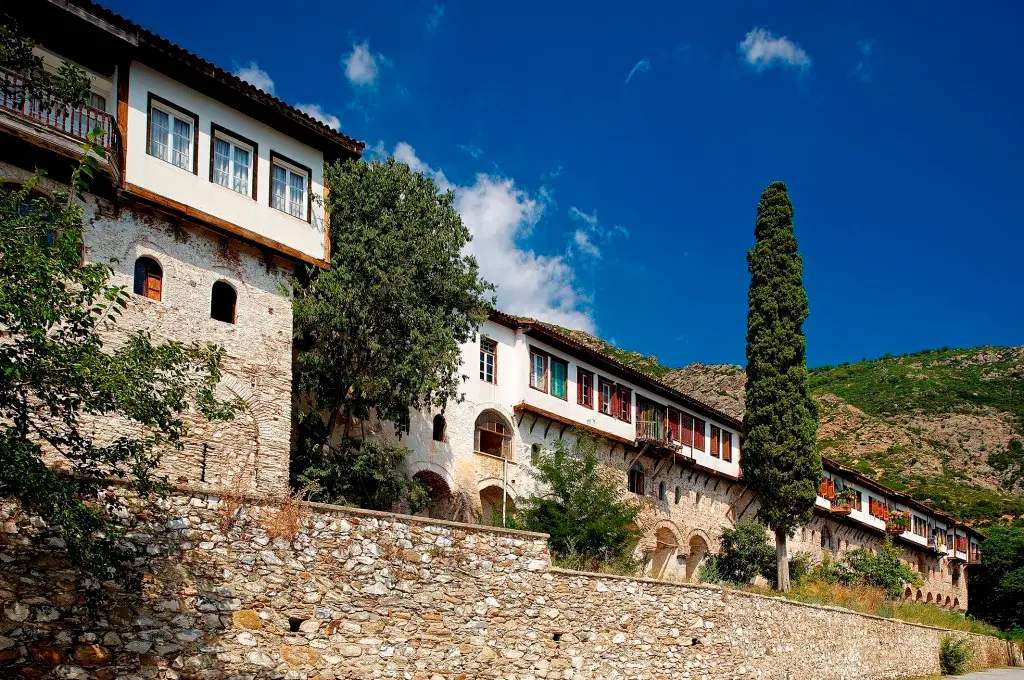
Galatista is one of the most significant mountain villages in Halkidiki, with an ancient history and rich architectural tradition. With around 3,000 permanent residents, it is one of the largest communities in central Halkidiki outside of Polygyros. It is located at the entrance of the region from Thessaloniki, at an altitude of 280m, and often serves as the first contact for visitors with traditional Halkidiki.
Location and How to Get There
In northwestern Halkidiki, 35 kilometers southeast of Thessaloniki. Driving time: 45 minutes from the center. It is the first "real" stop on the way to inner Halkidiki.
There are regular bus services with KTEL.
A Bit of History
Galatista has been continuously inhabited since ancient times. Its name comes from Celts (Galatians) who settled in the wider area during Hellenistic times. In the Byzantine centuries, it was an important center of ecclesiastical administration, with several monasteries and churches from that era.
During the Ottoman period, Galatista became a significant center for silk. The residents were engaged in silk cultivation — an extensive silk industry developed that exported its products to Constantinople and other cities. This period lasted until the late 19th century.
Architecture
Galatista retains noteworthy traditional architecture:
- Stone two-story houses from the 19th century (part of Ottoman Macedonian architecture)
- Paved alleys in the old center
- Byzantine Galatista Tower — a fortification building from the 14th century, in quite good condition
- Church of Saint Nicholas with a remarkable wooden carved iconostasis
- Old school and other public buildings from the Ottoman/early Greek period
It is designated as a traditional settlement, and new constructions must respect the architectural style.
What to Visit
- Galatista Tower: the most impressive monument. Free entrance. From its roof, there is a panoramic view of the surrounding area.
- Church of Saint Nicholas: in the center of the village, from the Byzantine era
- Monastery of Saint Anastasia Farmakolytria: 8 km from Galatista, a large women's monastery, an important pilgrimage center. Open for visits.
- Old center: a stroll through the paved alleys
- Folklore Museum: if open, with material on the silk tradition
Food
Galatista has several taverns offering traditional cuisine — homemade stews, grilled meats, and charcoal-grilled dishes. Due to its proximity to Thessaloniki, many Thessalonians come for weekends or Sunday lunch, which keeps the quality high.
Specialties:
- Traditional stews: giant beans, beef in wine sauce, pastitsada
- Meats: roasted lamb, lemony goat, grilled chops
- Snails "bourbourista"
- Local cheeses and local wine
- Spoon sweets: fig, walnut, bitter orange — a tradition of silk cultivation
Prices are affordable: 25-40 euros for a table for 2.
Accommodation
Galatista is not a traditional tourist destination — most visitors come for day trips. There are a few small accommodations available, mainly guesthouses or Airbnb-style rentals in restored traditional houses. Prices range from 40-80 euros/night.
A good choice for those seeking a "mountain" experience close to Thessaloniki — it can be a weekend getaway without traveling far.
Combination Visits
- Day trip from Thessaloniki: 45 minutes drive, ideal for Sunday morning
- Stop on the way to inner Halkidiki: pairs well with Polygyros (30 km) or Arnaia (40 km)
- Monastery of Saint Anastasia Farmakolytria: 8 km from Galatista, a pilgrimage visit
- Petroklio: neighboring village with a Wednesday market
Ideal For
- Those who love traditional mountain architecture
- Visitors with short vacations who want easy access from Thessaloniki
- Fans of Byzantine and Ottoman history
- Lovers of traditional Greek cuisine
- Visitors heading to the monastery of Saint Anastasia
Practical Information
- 2-3 ATMs, pharmacies, supermarkets, gas stations
- Good 4G/5G coverage
- Free parking everywhere
- Best time: spring and autumn for a mix of walks and explorations
