In Halkidiki, fish isn't a dish — it's a ritual. From fried anchovies to grilled octopus to mussels farmed in the very bays you're looking at, the coast puts on your plate exactly what the boat landed that morning. Here's how to order like a local.
What does "local" fish mean?
On the menus of fish taverns, you often see next to the name an indication of "local" or the origin (e.g., "Norway"). According to legislation from 2014, all restaurants must indicate origin and whether it is fresh or frozen. Not everyone complies with this. Signs that it is indeed fresh and local:
- In a ice display with whole fish where you can see the eyes (bright, clear, not cloudy) and the gills (red, not gray)
- Caught by the kilo in front of you
- The waiter can tell you when it was caught ("this morning", "last night")
- Different available varieties every day — if the menu is always the same throughout the season, it is probably frozen
Locally Caught Fish
Red Mullet
Pink-red fish, typically weighing 200-500g. One of the most flavorful and "premium" in Greek cuisine. Usually grilled, served whole. Caught year-round, peak season is September-November. Price: 55-80 euros/kilo fresh.
Barbouni
Small, bright red, characterized by "barbari" (whiskers). Usually 80-150g per fish, served in portions of 4-6 fish. Fried or grilled. Caught mainly in summer. Price: 60-90 euros/kilo. In the best taverns, small barbouni (35-50g) are fried whole and eaten with the bones — a delicacy.
Sea Bream
One of the most popular. Note: the majority of sea bream in fish taverns comes from fish farming (not caught). It is not bad quality, but it is not "local catch". True wild sea bream costs 70-100 euros/kilo, while farmed ones cost 30-45. If the price is below 40 euros/kilo, it is 100% farmed.
Sardine / Anchovy
Cheap small fish, portion of 250-400g at 12-16 euros. Fried. An authentic Greek choice that locals enjoy more. Summer is peak season. Always worth asking for.
Horse Mackerel, Gopa, Kolios
Medium fish, a more "popular" choice. Prices 18-30 euros/kilo. Grilled or over charcoal. Often not found on the menus of tourist spots, but if you ask for them in a local fish tavern, they will bring them to you.
Spotted Seabream, Black Sea Bream, Cryotaki
Smaller coastal fish. Fried, whole. Rarer but worth it.
Grouper, Rofos, Sinarid
"Luxury" fish. Large, expensive (80-130 euros/kilo), served in portions or in fish soup. Rarely truly "local" — most are frozen. If you really want these types, go to a serious fish tavern and ask directly.
Seafood
Halkidiki Mussels
They are probably the most characteristic local product. They are farmed on lines in Ormos Panagias, Olympiada, and other protected areas. They are produced year-round but peak from May to October. They are served:
- Steamed with local wine and herbs
- Saganaki with tomato, garlic, feta
- Fried with batter
- Mussel pilaf (rarer)
Portion 250-400g: 12-18 euros. Almost always fresh when they say "Halkidiki mussels" — the journey from farm to plate is hours.
Octopus
Almost everywhere, but the differences in quality are huge. Good octopus: tender but with substance, grilled after boiling, with olive oil and oregano. Bad: chewy, watery taste (usually frozen from Morocco). Local octopus is caught along the rocky shores of Sithonia. Price: 16-22 euros for a portion of 200-300g.
Squid
Fried rings or grilled stuffed. Among the most likely to be frozen. Fresh local squid is mainly caught in spring and autumn. Price: 14-22 euros per portion.
Cuttlefish
Often cooked with spinach or rice. A more "local" choice, less commonly found on tourist menus. If you find it, it's worth it.
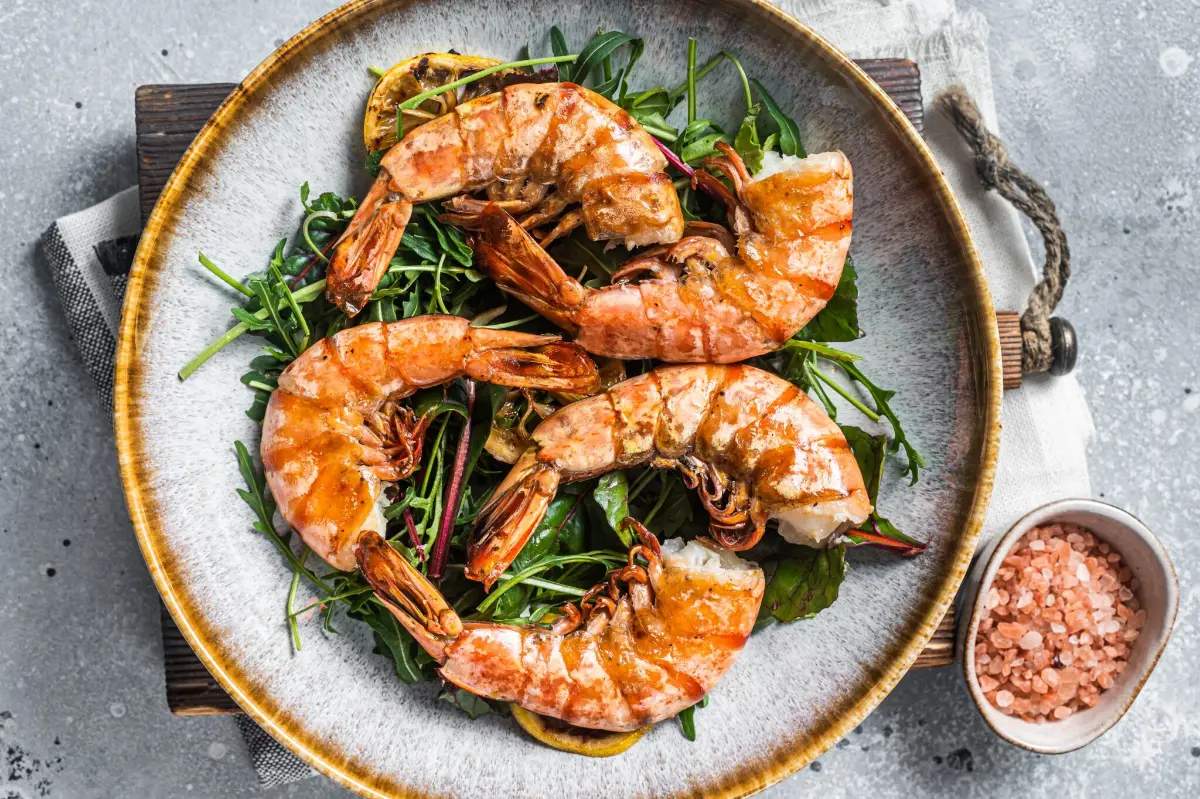
Shrimp
Symonia (small, straight from Symonia/Singitic Gulf) are truly local and distinct in flavor — eaten raw with lemon or grilled alive. Larger shrimp (Mediterranean, Argentine red) are usually frozen. Price of Symonia shrimp: 35-55 euros per portion depending on size.
Crab, Lobster, Soft-shell Crab
Rare and expensive. A whole lobster for 2 people starts from 80-100 euros and goes up. Usually cooked with pasta or saganaki. If you order it, make sure it is alive when cooking starts — this is the difference in quality and price.
What to Avoid
- "Mixed seafood plate" in tourist areas: often a combination of frozen shrimp, squid, and mussels without clear origin.
- Sushi/poke bowls: salmon is almost 100% imported from Norway, so it is not "local". If you are looking for a local experience, skip it.
- "Fresh" fish with a fixed price throughout the season: fresh fish have variable prices daily depending on the catch. Fixed price = likely frozen.
- In frozen displays with small fish "whole grams": if they are all the same size and have cloudy eyes, they are thawed frozen.
Good Places for Serious Seafood
I won't give names of specific taverns because they change. But the areas with a strong fishing tradition and the most reliable fish taverns include:
- Porto Koufo: fish straight from the boat. The best choice for "from sea to plate".
- Ormos Panagias: specializes in mussels.
- Uranopolis: more touristy but several good options, especially near the small harbor.
- Hierissos: smaller port, more "local" crowd, authentic experience.
- Pefkochori and Skala Fourkas: several fish taverns, good price/quality balance.
- Olympiada: traditional fishing village in the north, good mussel taverns.
Practical Tips
- Always ask the price per kilo before choosing fish. An 800g fish at 60 euros/kilo = 48 euros per portion.
- Order grilled fish with olive oil and lemon, not "fish alla limone" with dairy. The simple Greek method highlights the flavor of fresh fish.
- Accompaniment: local white wine (Porto Carras or another local), tsipouro for meze/seafood. Avoid red wine with fish.
- Order whole fish instead of fillet when possible — this way you know what you are being served.
- Summer season: more during lunch, less at dinner in experience because fresh fish from the morning "runs out" early on weekends.
Practical notes for international visitors
A little vocabulary for the taverna: psari tis oras means fresh fish sold by weight (confirm the per-kilo price first), gavros is fried anchovies as a cheap starter, and chtapodi is octopus, best grilled. Pointing is fine — in good tavernas you pick your fish from the display case.
By region: mussels belong to the east coast (Olympiada, Tripiti — straight from the ropes in the gulf), tuna to Porto Koufo, and the rule "where the fishing boats land, the kitchen is good" beats any review app.