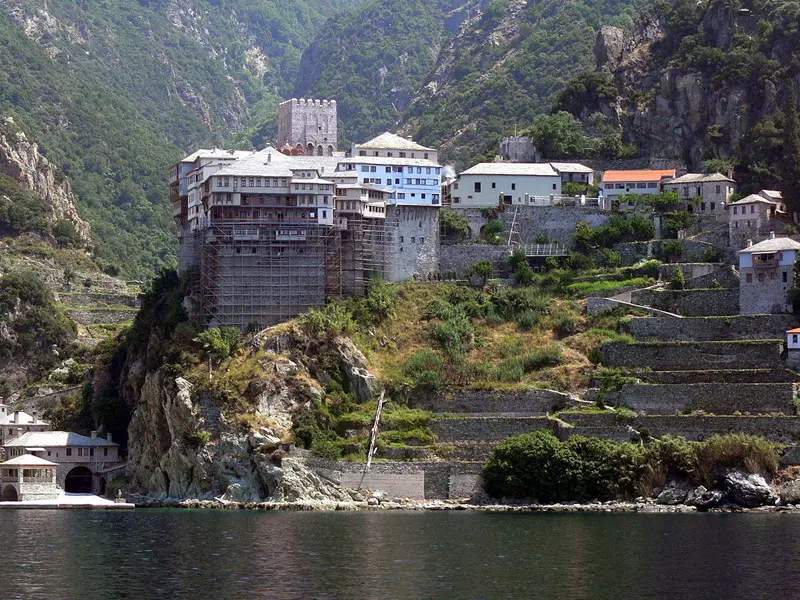
Dionysiou
Mount Athos, Athos Peninsula, Halkidiki
The Dionysiou Monastery is one of the most **impressively located** monasteries of Mount Athos: perched on a rock 80 meters above the sea on the southwestern coast of the peninsula. The view from the outside makes Dionysiou one of the most photographed monasteries of Mount Athos. It was founded in **1375 AD** by the monk Dionysius with funding from the Emperor of Trebizond Alexius I. It holds the **5th position** in the hierarchy. The **icon of Saint John the Baptist** is preserved here — according to tradition, painted by the Evangelist Luke. Also significant is the golden bull of Alexius III (1374) — one of the most important Byzantine documents in Mount Athos. The monastery's seats (cells in external locations) are scattered throughout the surrounding area. The architecture follows the Athonite style but is influenced by the need for security on the steep walls. Access for pilgrims: mainly by boat from Daphne (1 hour). The monastery accepts visitors but is relatively small — the number of guests is limited.
Highlights
Frequently Asked Questions
Men only, with a special permit (Diamonitirion). Women have been forbidden from entering the peninsula for ~1000 years (Avaton rule). They can view monasteries from a sea cruise.
Contact the Pilgrims' Office in Thessaloniki (+30 2310 252578) ~6 months ahead. You need a passport photo and a monastery confirmation. Cost €25–35 per night.
Ferry from Ouranoupoli (on mainland Halkidiki) to Daphni — the entry port. ~2 hours. Your Diamonitirion is checked in Ouranoupoli before boarding.
20 ruling monasteries plus many sketes and cells. Best-known: Megisti Lavra, Vatopedi, Iviron, Chilandariou, Simonos Petras, Agiou Pavlou, Dionysiou.
Yes. Daily summer cruises leave Ouranoupoli sailing along the western coast — monasteries are visible from sea level. Open to women and children.