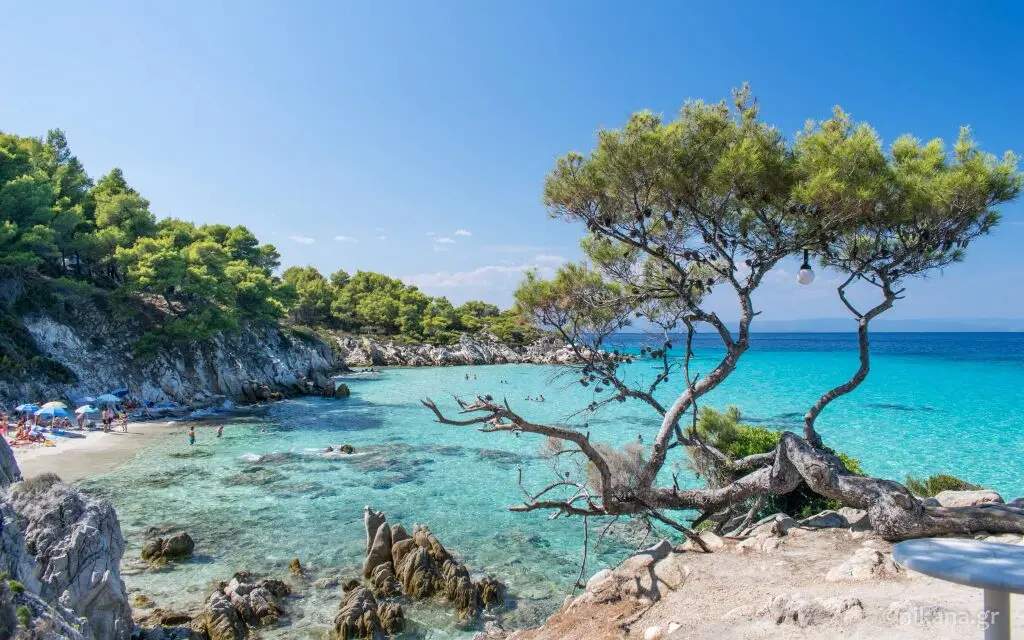
Sithonia's water is so clear you don't need a boat to see the seabed — just a mask. Among Halkidiki's rocks and pine-backed coves hide small fish, sea urchins and seagrass swaying in the current. Here's where to slip in with your snorkel, from the famous spots to the hidden ones.
The top snorkeling beaches
Portokali (Orange Beach), part of the Kavourotripes coves, combines pebbles, shallow turquoise water and rocks at the edges — ideal for fish. Karydi is one of the most photographed: at the tip of the headland, rocks drop into blue-green water. At Kalamitsi, the twin coves with their little rocks are a favourite of divers too.
Rocky corners full of life
Kastri with its rocky headland, Trani Ammouda near Vourvourou, and the deep, clear Porto Koufo — Greece's most enclosed natural harbour — all offer rocks and drop-offs where fish gather.
Islets & shallows
Vourvourou and the islets of Diaporos are a shallow-water paradise, with meadows of Posidonia seagrass. On the Athos side, Trypiti (pebble, facing Ammouliani) has a clear channel with current and life.
What to bring
- Water shoes: essential on the rocks — sea urchins are common.
- Mask & snorkel: bring your own; few beach bars rent them.
- Timing: early morning the sea is glassy and visibility is best.
- Reef-safe sunscreen and a float if you venture from shore.
Want to go deeper?
If snorkeling whets your appetite, see the guide to diving in Halkidiki or book an organised snorkeling experience. For shallow, family water, also see the shallow-water beaches.
Practical notes
- Safety: watch for boats; stay near shore and not alone.
- Water: warm and clear from June to September; rocky spots stay transparent even in a light breeze.
- Getting there: most are in Sithonia, along the coast road — a car helps.
Browse all beaches in Halkidiki and find your own corner with the fish.